5 Photo Sharing Trends That Will Define Events in 2025
From AI-powered instant delivery to sustainability-focused digital solutions, discover the innovations shaping how we capture and share event memories this year.
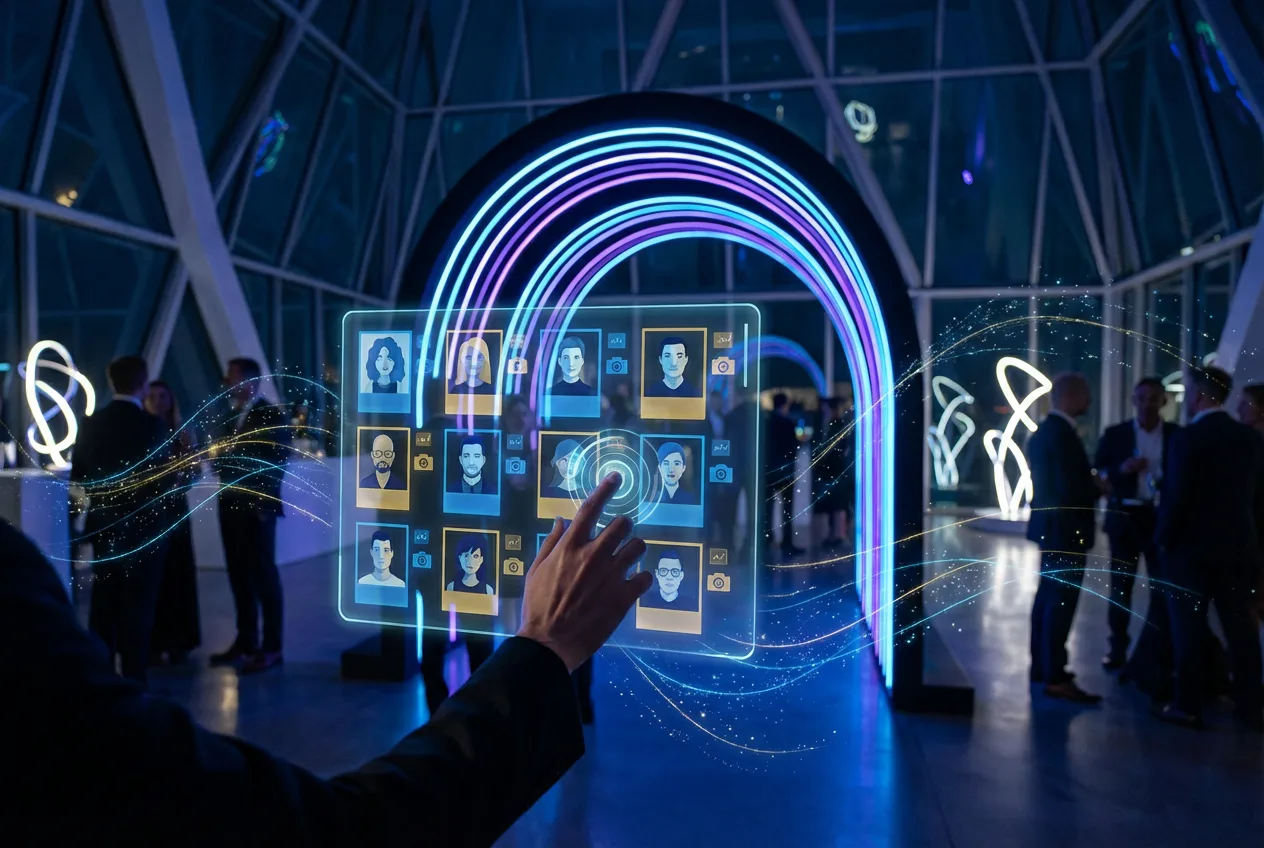
The way we capture and share event memories has undergone a remarkable transformation. What was once a weeks-long process of developing, sorting, and mailing photographs has evolved into an instant, intelligent, and deeply personal experience. As we move through 2025, several key trends are reshaping the event photography landscape.
Whether you’re an event planner, photographer, or simply someone who loves capturing memories, understanding these trends will help you stay ahead of expectations and deliver experiences that truly resonate.
Sources: NIST FRVT Benchmark , INMA Research
Trend 1: AI Face Recognition Goes Mainstream
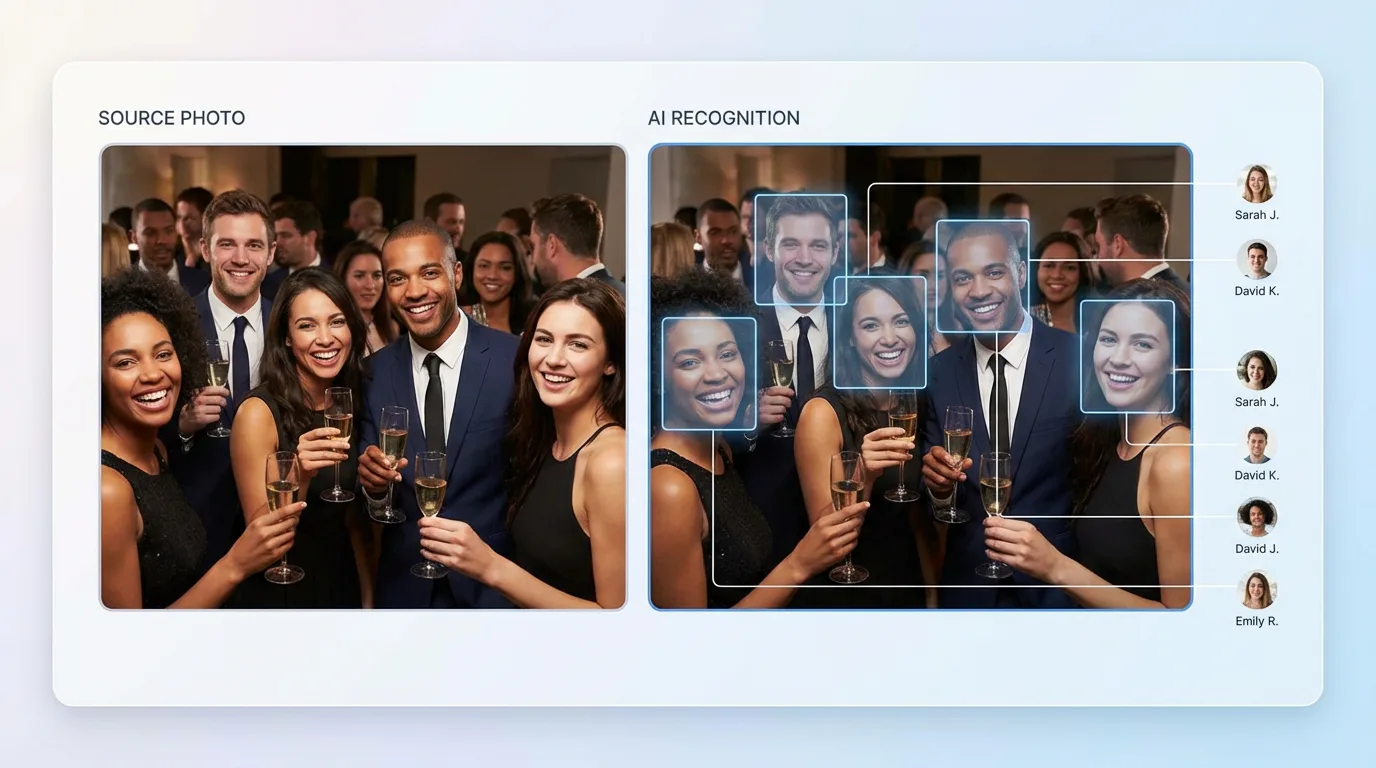
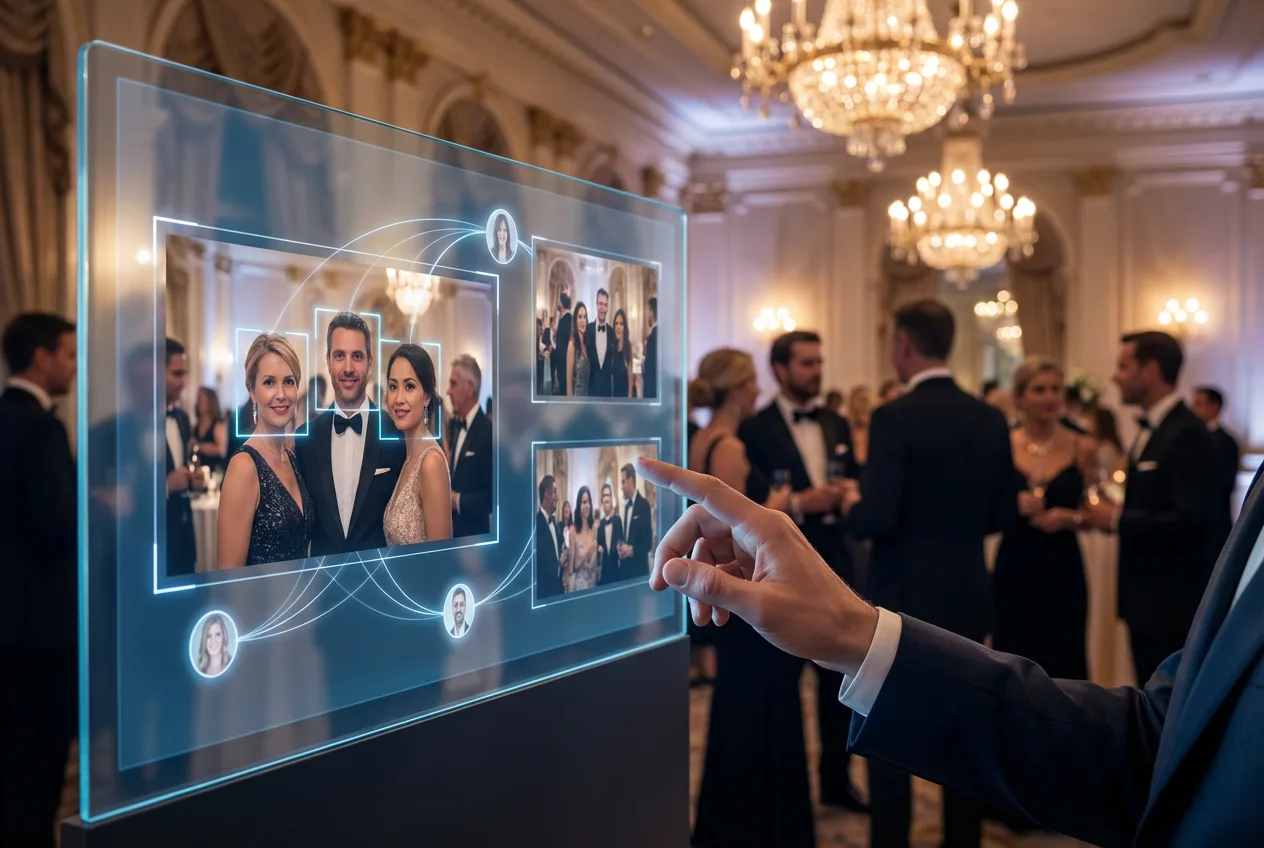
The technology that once seemed like science fiction is now a standard expectation at events of all sizes. AI-powered face recognition has matured to the point where it’s not just accurate—it’s remarkably reliable across challenging conditions.
What’s Changed
Modern face recognition systems achieve 99.5% accuracy rates, even when dealing with:
- Partial visibility : Side profiles, faces partially obscured by glasses or masks
- Variable lighting : Everything from harsh midday sun to dimly lit dance floors
- Group complexity : Correctly identifying individuals within large group shots
- Age variations : Matching faces across registration photos taken months earlier
The Accuracy Revolution
Early face recognition systems struggled with anything but front-facing, well-lit portraits. Today’s AI can identify guests from candid crowd shots, motion-blurred dance photos, and even reflections in mirrors or glasses.
Real-World Impact
For event attendees, this means one simple action—often just a selfie—unlocks access to every photo they appear in. No more browsing through thousands of images hoping to spot yourself. The AI does the work, and the results appear in seconds.
Trend 2: Zero-App Experiences
Remember when accessing event photos required downloading a dedicated app, creating an account, and navigating complex interfaces? That friction is disappearing fast.
The Frictionless Future
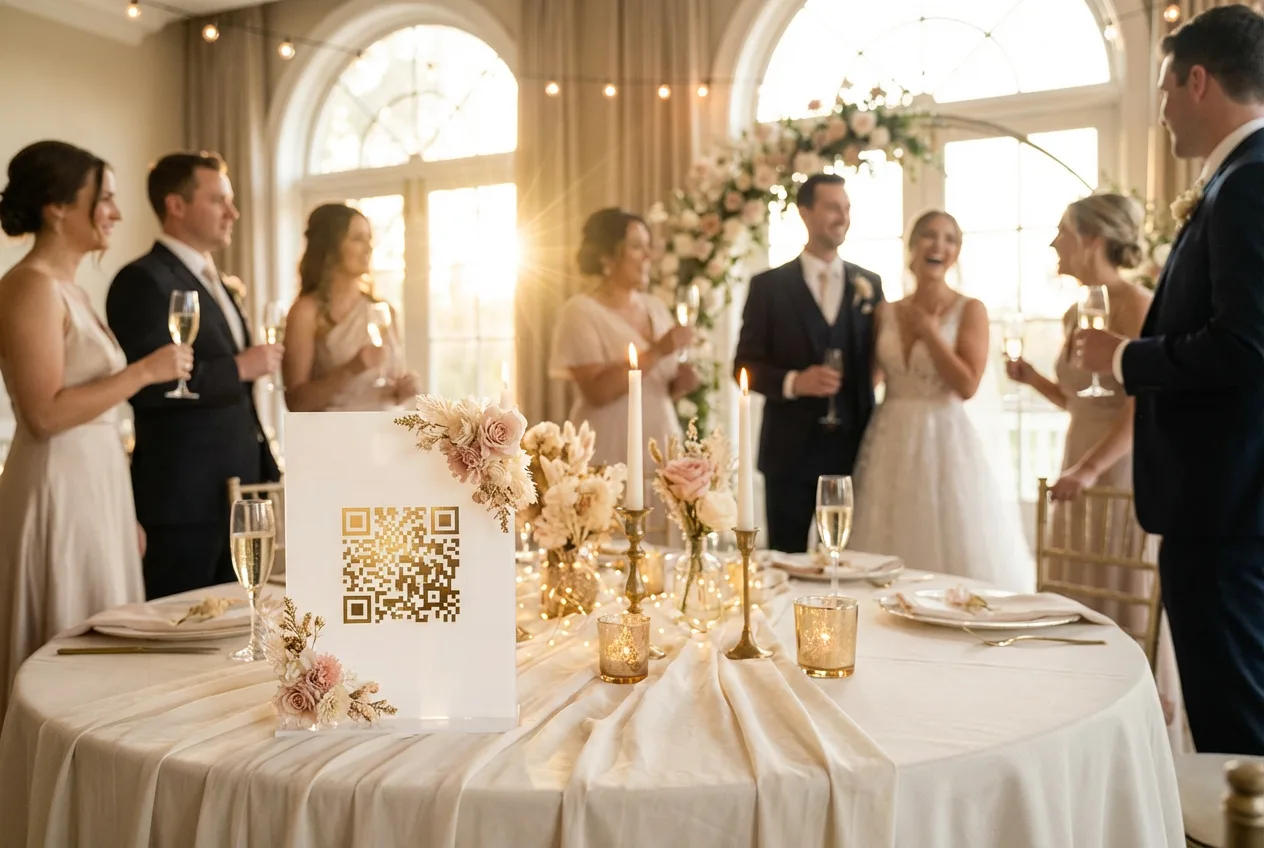
Today’s best photo sharing systems work through simple QR codes:
- Scan : Point your phone camera at a QR code
- Access : Gallery opens directly in your browser
- View : Find your photos using face recognition or search
- Download : Save high-resolution images with one tap
- Share : Post directly to social media
No app downloads. No account creation. No passwords to remember.
Why This Matters
Every point of friction reduces engagement. Research shows that 25% of users abandon an app after just one use , and the average app loses 80% of its daily active users within the first three days. QR code-based web access eliminates this friction entirely—no downloads, no accounts, no barriers.
The 10-Second Rule
If guests can’t access their photos within 10 seconds of scanning a QR code, engagement drops dramatically. The best systems now achieve photo delivery in under 5 seconds.
Trend 3: Real-Time Photo Walls
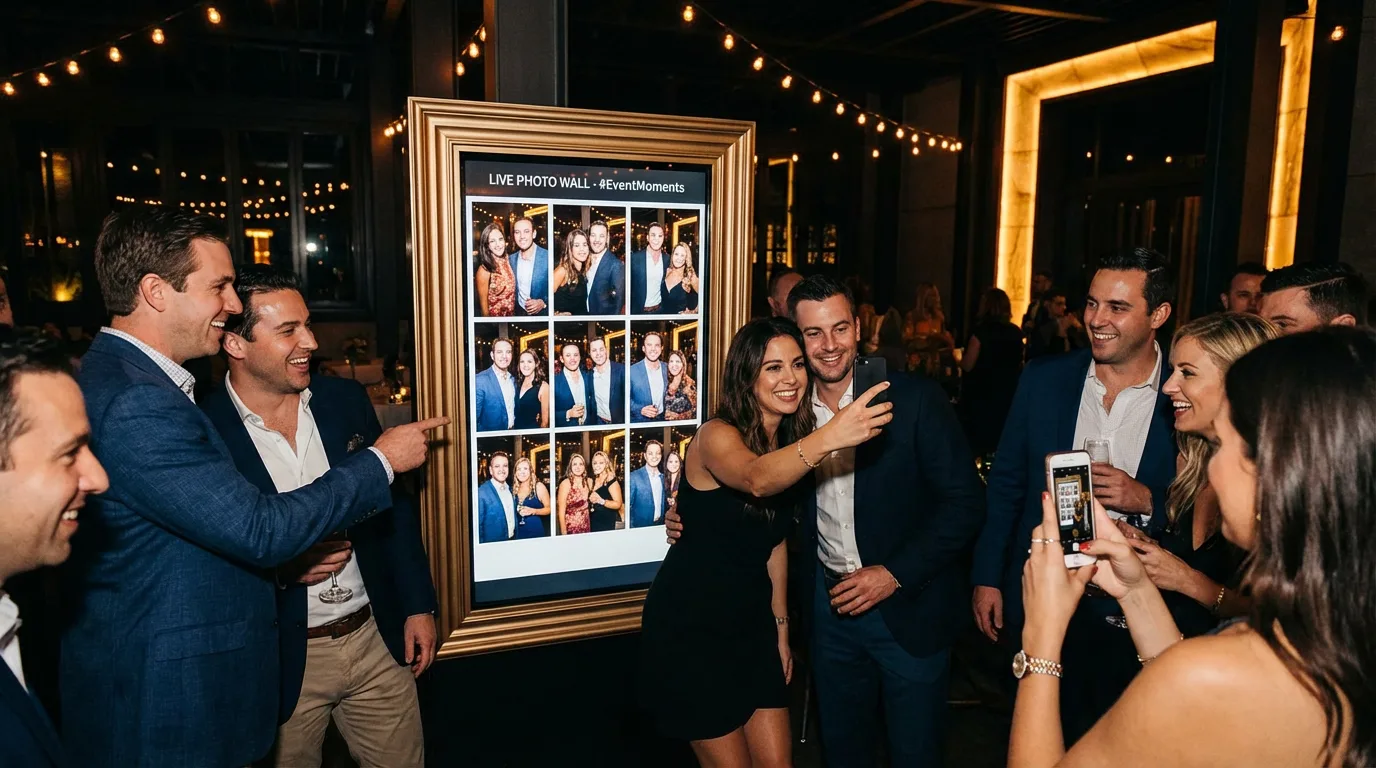
Static photo booths are giving way to dynamic, living photo experiences. Real-time photo walls have become a centerpiece of modern events, transforming passive photography into active engagement.
How Photo Walls Work
Photographers capture moments throughout the event. As images upload, they appear on large displays positioned in high-traffic areas:
- Entry areas : Build excitement as guests arrive
- Reception spaces : Create conversation starters during cocktail hours
- Dance floors : Amplify energy during celebrations
- Exit points : Leave guests with lasting impressions
The Social Proof Effect
When guests see themselves on screen, something magical happens. They point, they laugh, they grab their phones to share. This creates a cascade effect:
- Guests look for more photos
- They share their favorites immediately
- Others see the shares and want to participate
- Overall engagement multiplies
Trend 4: Privacy-First Design
As AI-powered photography becomes more prevalent, privacy concerns have naturally followed. The best platforms in 2025 are those that put user control at the center of their design.
Compliance Standards
Event photo platforms must now navigate complex regulatory landscapes:
GDPR (European Union)
- Explicit consent required before face recognition
- Right to deletion honored within 72 hours
- Clear data retention policies communicated
KVKK (Turkey)
- Explicit consent for biometric data processing
- User rights to access and correct data
- Cross-border transfer restrictions
Other Jurisdictions
- CCPA (California) requirements
- LGPD (Brazil) compliance
- Emerging regulations worldwide
User Control Features
Privacy Features to Expect
- Opt-in (not opt-out) for face recognition
- Easy deletion of photos and face data
- Control over who can see your photos
- Download your data on request
- Time-limited photo availability options
Privacy as Differentiator
According to Cisco’s 2024 Consumer Privacy Survey , 87% of consumers won’t do business with a company if they have concerns about its security practices. Transparency builds trust, and trust drives participation.
Trend 5: Sustainable Digital-Only Delivery
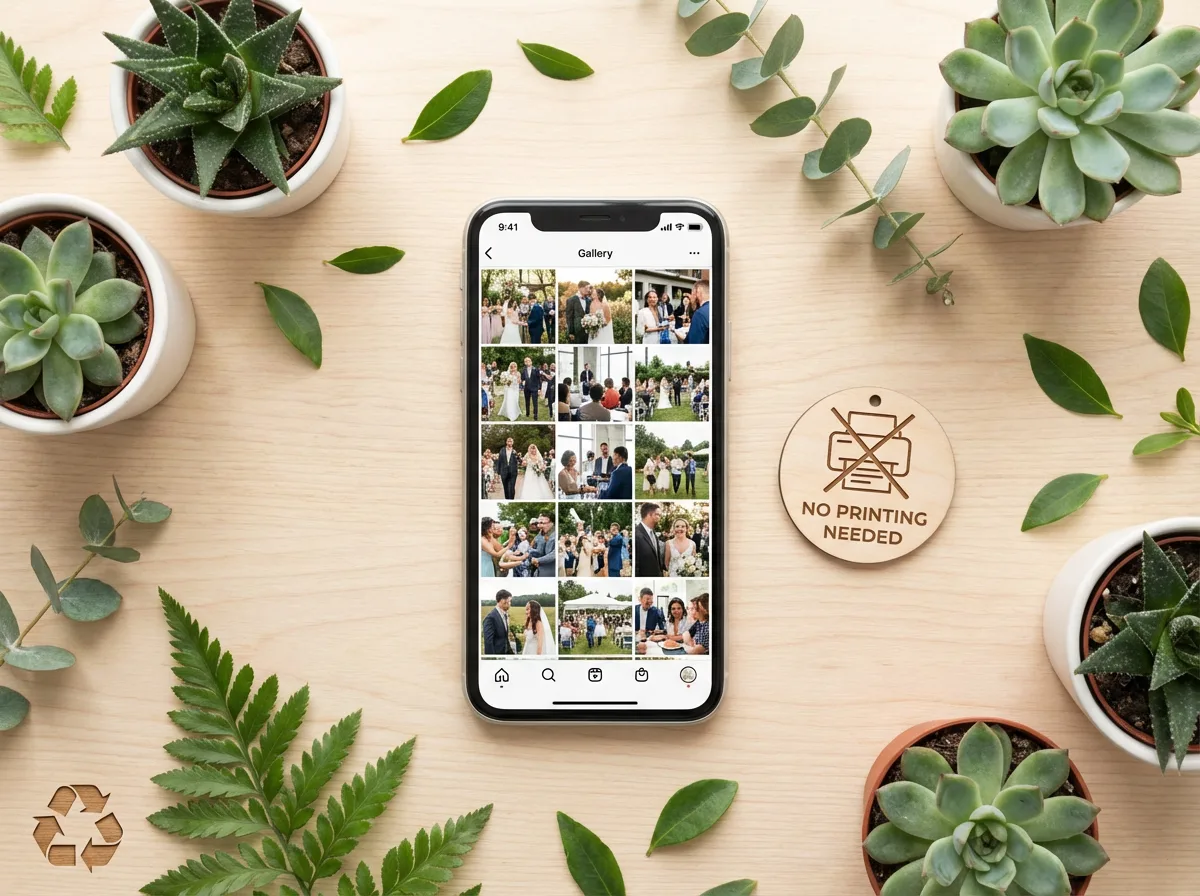
Environmental consciousness is reshaping every industry, and event photography is no exception. The shift away from printed photos toward digital-only delivery is accelerating.
The Environmental Case
Traditional event photography created significant waste:
- Thousands of printed proofs per event
- Packaging and shipping materials
- Photos discarded when unwanted
- Chemical processing byproducts
Digital delivery eliminates most of this environmental impact while actually improving the guest experience.
Beyond Just “No Printing”
Sustainable photo sharing in 2025 encompasses:
- Efficient cloud storage : Optimized file sizes without quality loss
- Green hosting : Data centers powered by renewable energy
- Carbon-neutral operations : Offset programs for remaining impact
- Extended accessibility : Photos available for years, reducing future reproduction
The Business Case
Sustainability isn’t just about doing good—it’s increasingly a business requirement:
- Corporate events demand carbon-neutral vendors
- Younger demographics expect sustainable options
- Cost savings from eliminating print logistics
- Brand alignment with environmental values
What This Means for Event Planners
These trends aren’t just interesting observations—they have practical implications for anyone planning events in 2025 and beyond.
Action Items
-
Evaluate your photo sharing technology
- Does it offer AI face recognition?
- Is the guest experience truly frictionless?
- What privacy controls are available?
-
Plan for real-time engagement
- Consider where photo walls could enhance your event
- Budget for appropriate display technology
- Train staff on managing live photo displays
-
Communicate privacy clearly
- Add photo policies to event materials
- Provide opt-out mechanisms at registration
- Display privacy notices at photo stations
-
Embrace sustainability messaging
- Highlight digital-only delivery in marketing
- Choose vendors with green credentials
- Track and report environmental metrics
Looking Ahead: What’s Next?
While these five trends define 2025, the evolution continues. On the horizon:
- AR-enhanced photos : Adding digital elements to captured moments
- Generative AI touchups : Automatic enhancement while preserving authenticity
- Cross-event memories : AI connecting photos from related events over time
- Voice-activated retrieval : Finding your photos by simply asking
The Constant: Human Connection
No matter how technology evolves, the fundamental purpose remains unchanged—helping people capture, preserve, and share the moments that matter most. The best innovations are those that get out of the way, making the technology invisible while the memories shine through.
Conclusion: The Future Is Instant and Intelligent
The transformation of event photography reflects broader shifts in how we experience and share our lives. Instant access, intelligent organization, privacy respect, and environmental responsibility aren’t just nice-to-haves—they’re baseline expectations.
For event planners, embracing these trends means delivering experiences that guests will remember and share. For attendees, it means never missing a memory and always staying in control of how those memories are used.
The future of event photography is here, and it’s faster, smarter, and more personal than ever before.
Ready to Experience the Future?
PhotoMea incorporates all five of these trends into a seamless platform. From AI-powered face recognition to privacy-first design, we’re building the tools that make event memories accessible, shareable, and sustainable.
For more on implementing these trends, explore our guides on QR code strategies and privacy compliance .
PhotoMea Team
Content Team
The PhotoMea team is dedicated to helping event organizers and photographers deliver memorable experiences through innovative photo sharing solutions.
Related Articles
How AI Face Recognition is Transforming Event Photography
From weddings to corporate conferences, AI-powered face recognition is revolutionizing how guests find and receive their event photos. Here's how this technology works and why it matters.
Read More
The Complete Guide to Wedding Photo Sharing with QR Codes in 2025
Transform your wedding day memories with instant QR code photo sharing. Learn how to set up a seamless system that lets every guest access and contribute photos effortlessly.
Read More
Data Privacy in Event Photography: A Complete GDPR and KVKK Compliance Guide
Navigate the complex world of data protection in event photography. Learn how to use AI-powered photo sharing while maintaining full GDPR and KVKK compliance.
Read More