The Ultimate QR Code Strategy for Maximizing Event Photo Engagement
Strategic QR code placement dramatically increases photo engagement. Learn exactly where, when, and how to deploy QR codes for maximum impact at your next event.
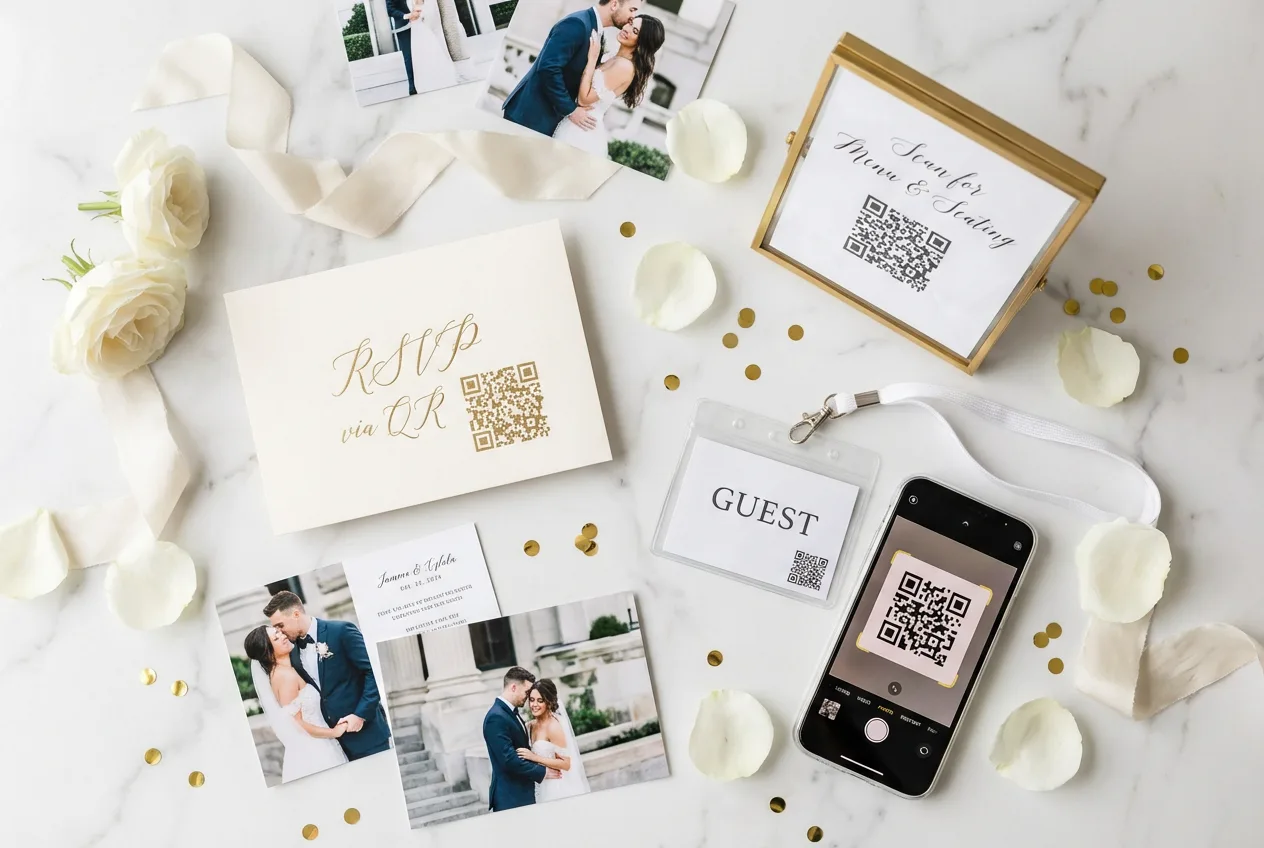
The humble QR code has evolved from a warehousing inventory tool into one of the most powerful engagement mechanisms in modern event planning. When deployed strategically, QR codes can transform passive attendees into active participants, dramatically increasing photo discovery, sharing, and overall event engagement.
But not all QR code implementations are created equal. The difference between a QR code that gets ignored and one that drives 70%+ engagement comes down to psychology, placement, and timing. This guide will teach you exactly how to optimize each element.
Sources: QR Code Statistics 2024 , QR Code Tiger Report
The Psychology of QR Code Placement
Understanding why people scan (or don’t scan) QR codes is fundamental to deploying them effectively. Human behavior around QR codes follows predictable patterns.
The 3-Second Decision Window
When someone encounters a QR code, they make a subconscious decision within approximately 3 seconds:
- Notice : Is the QR code visible and prominent?
- Understand : Is it clear what scanning will provide?
- Decide : Is the benefit worth the effort of reaching for my phone?
If any of these fail, the opportunity is lost.
The Effort Equation
People subconsciously calculate: “Is what I’ll get worth the 5-10 seconds it takes to pull out my phone and scan?” Your QR code placement must make the answer an obvious “yes.”
High-Traffic vs. High-Attention Zones
Not all locations are equal for QR code engagement:
High-Traffic Zones
- Entry/exit points
- Hallways and corridors
- Food and beverage areas
- Restroom approaches
Characteristic: Many eyes, but divided attention. People are moving.
High-Attention Zones
- Seated areas
- Waiting lines
- Photo booth areas
- Rest/lounge spaces
Characteristic: Fewer people, but focused attention. People have time.
The best QR code strategy uses both: high-traffic for awareness, high-attention for action.
Pre-Event Deployment: Building Anticipation
Your QR code strategy should begin before anyone arrives at your event.
Save-the-Dates and Invitations
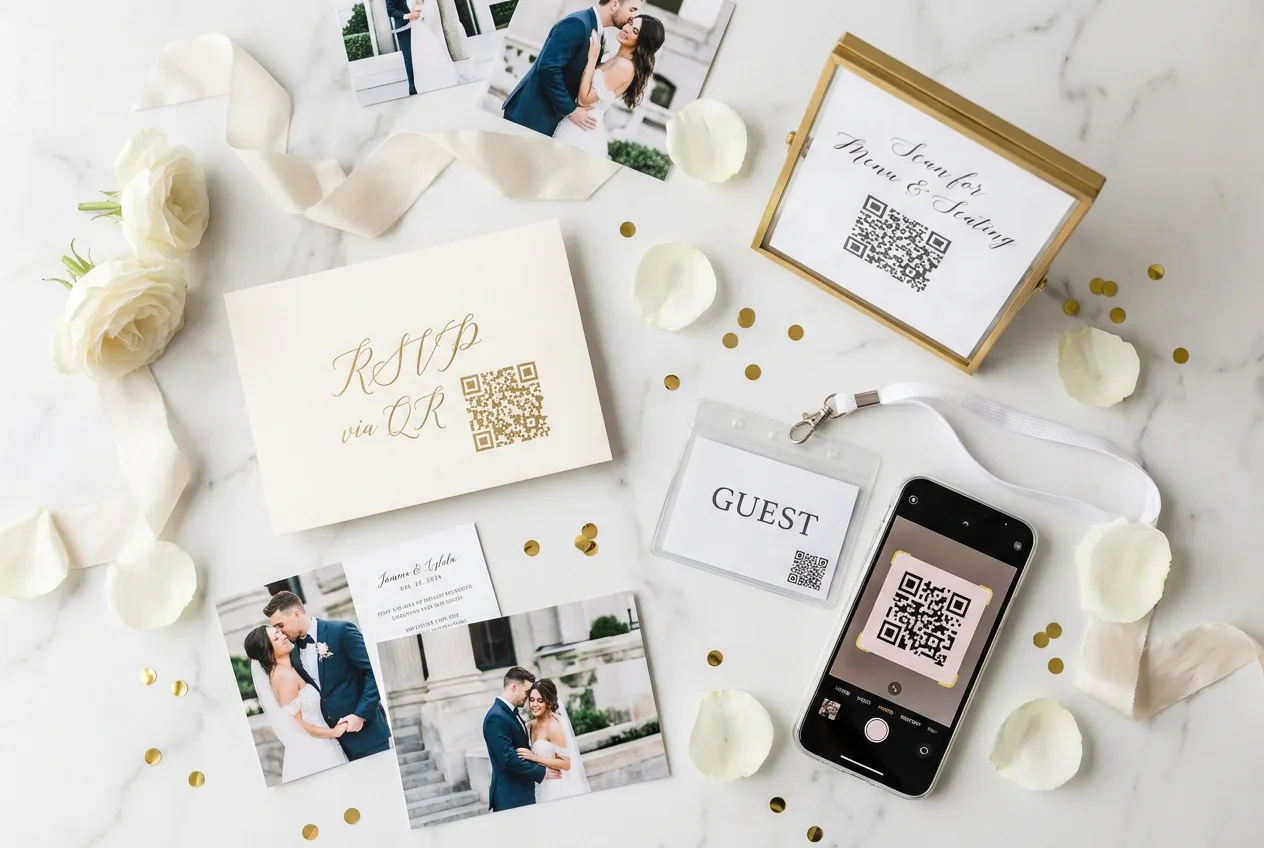
Include QR codes in initial communications:
- Purpose : Pre-registration for face recognition
- Placement : Prominent but not dominant in design
- Copy : “Register your face now for instant photo access at the event”
Email Campaigns
A series of emails can drive pre-registration:
| Timing | QR Code Purpose | |
|---|---|---|
| Announcement | 4 weeks before | Introduce photo system |
| Reminder | 2 weeks before | Drive pre-registration |
| Final push | 3 days before | Last chance to register |
| Day-of | Morning of event | How to access photos |
Social Media Teasers
Create shareable content featuring your QR codes:
- Behind-the-scenes setup photos with visible QR displays
- “Sneak peek” of the photo system interface
- Testimonials from previous events
- Tutorial videos showing the scanning experience
The Preview Effect
When attendees understand the system before arriving, they’re significantly more likely to engage with QR codes at the event. Familiarity reduces friction—research shows removing onboarding friction can boost engagement by up to 50% .
During-Event Placement Strategy
This is where your QR code strategy makes or breaks engagement. Strategic placement at key touchpoints throughout the event ensures maximum visibility and action.
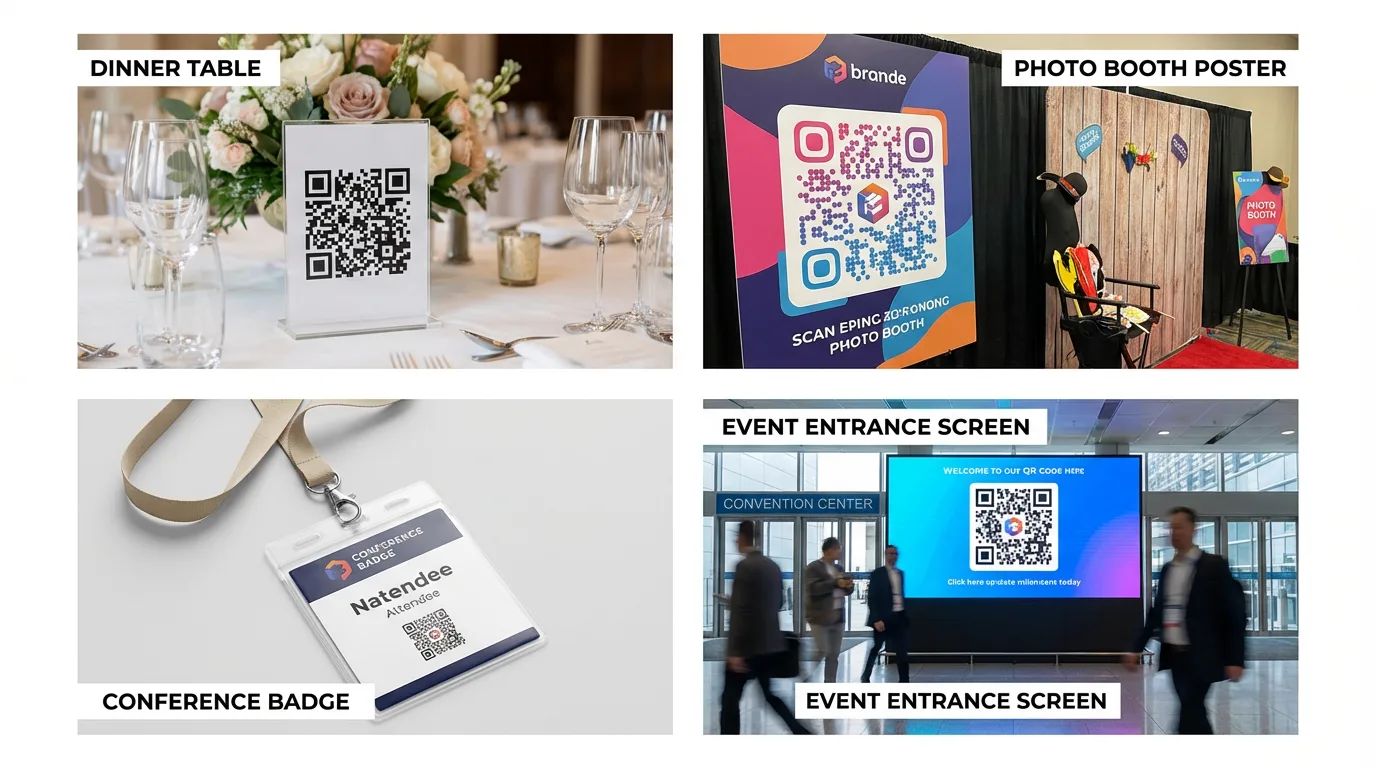
Entry Points and Registration
The first impression sets expectations:
Entry Point QR Checklist
- Large, visible QR code at check-in desk
- Printed on lanyards or name badges
- Staff briefed to mention photo system
- Digital display with animated instructions
- Physical standee for selfie station
Best Practice : Create a dedicated “photo registration” station near but separate from event check-in. This prevents bottlenecks while ensuring everyone knows about the system.
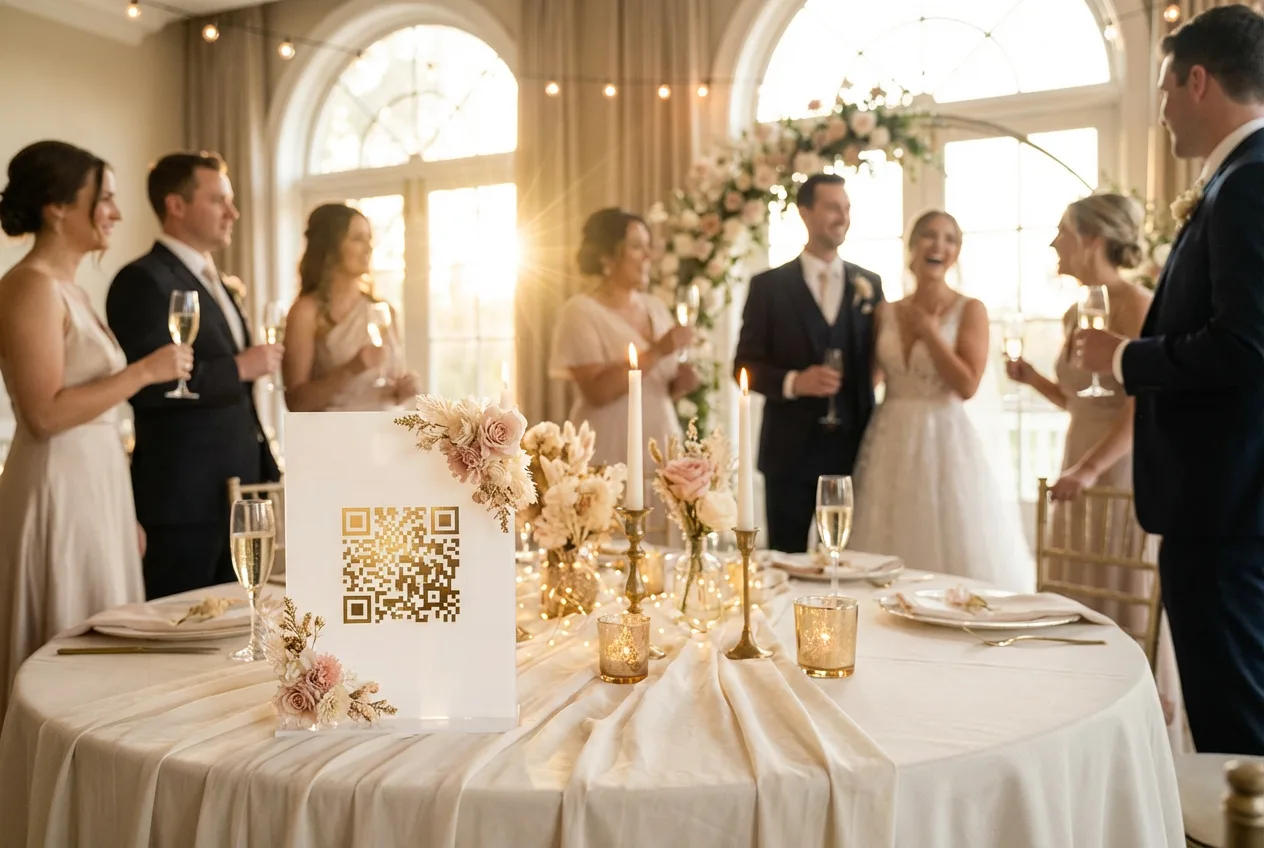
Table Settings and Centerpieces
For seated events (weddings, galas, corporate dinners):
- Placement : One QR code stand per table, visible from all seats
- Design : Elegant, matching event aesthetic
- Copy : Brief, clear instructions with visual example
- Timing : Guests notice during natural pause moments (between courses, during speeches)
Photo Booth and Activation Areas
These are high-intent zones—people are already thinking about photos:
- Place QR codes at eye level when standing
- Include on the backdrop or frame
- Position at the exit of photo experiences
- Staff can actively encourage scanning
The Restroom Strategy (Yes, Really)
Restrooms offer unique advantages for QR codes:
- Captive audience : People have a moment to themselves
- Mirror placement : Eye-level, impossible to miss
- Private scanning : No social pressure or feeling watched
- Multiple visits : Repeated exposure throughout event
Stage and Speaker Areas
During presentations, attention is focused:
- Display QR codes on presentation slides at appropriate moments
- Place on podiums or speaker tables
- Include in digital signage around the stage
- Mention verbally during announcements
Design Best Practices
A QR code’s design dramatically affects its scan rate. These aren’t just aesthetic considerations—they directly impact engagement.
Size Requirements
The scanning distance determines minimum size:
| Scanning Distance | Minimum QR Size |
|---|---|
| 6 inches (phone held close) | 0.5 inches |
| 2 feet (table centerpiece) | 1 inch |
| 6 feet (wall display) | 3 inches |
| 15+ feet (banner/signage) | 8+ inches |
Rule of thumb : QR code size should be at least 1/10th of the expected scanning distance.
Contrast and Visibility
QR codes require high contrast to scan reliably:
- Dark code on light background (classic black on white works best)
- Avoid placing on busy backgrounds or photos
- Ensure adequate lighting in placement areas
- Test scanning in actual venue conditions
Color Caution
While colored QR codes can be aesthetically pleasing, they reduce scan reliability. If you must use colors, maintain high contrast between the code and background, and always test extensively.
Branded Frames and Call-to-Actions
The area around your QR code is valuable real estate:
Essential elements:
- Clear instruction: “Scan to see your photos”
- Visual cue: Phone icon pointing at code
- Benefit statement: “Find yourself in seconds”
- Branding: Event logo or name (subtle)
Avoid:
- Cluttered designs that compete with the code
- Ambiguous instructions
- No context at all (just a bare QR code)
Post-Event Follow-up: Extending Engagement
Your QR code strategy doesn’t end when the event does.
Thank-You Communications
Include QR codes in all follow-up materials:
- Thank-you emails with direct gallery access
- Physical thank-you cards (for weddings/galas)
- Survey requests with photo gallery as incentive
Social Media Integration
Encourage continued sharing:
- Post highlight photos with QR code to full gallery
- Create Instagram Stories with swipe-up to gallery
- Share “best of” compilations linking back to event photos
Long-Term Access Reminders
Photos become more valuable over time:
- Anniversary reminders (“Remember this day?”)
- Milestone messages (“5,000 photos shared from your event!”)
- Re-engagement campaigns for annual events
Measuring Success: Key Metrics to Track
What gets measured gets improved. Track these metrics to optimize future events:
Primary Engagement Metrics
| Metric | Good | Great | Excellent |
|---|---|---|---|
| Scan rate (% of attendees) | 40% | 60% | 80%+ |
| Photos viewed per person | 10 | 25 | 50+ |
| Download rate | 15% | 30% | 50%+ |
| Social share rate | 5% | 15% | 30%+ |
Secondary Analysis
- Time to first scan : How quickly do attendees engage?
- Scan location heat maps : Which placements perform best?
- Peak scan times : When is engagement highest?
- Device types : Mobile vs. tablet vs. other
- Return visits : How many come back to the gallery?
Continuous Improvement
Each event provides data for the next. Track which QR code placements and designs perform best, then double down on what works for future events.
Your QR Code Checklist
Use this comprehensive checklist for your next event:
Complete QR Code Strategy Checklist
- Pre-event: QR codes in invitations and emails
- Entry: Large display with clear instructions
- Tables: Elegant stands at each seating area
- Photo areas: Prominent placement near all photo ops
- Restrooms: Mirror-level placement with simple copy
- Stage: Digital display during key moments
- Exit: Final reminder as guests leave
- Follow-up: QR codes in all post-event communications
Conclusion: QR Codes as Experience Multipliers
QR codes are no longer just convenient shortcuts—they’re experience multipliers. When deployed strategically, they transform the relationship between attendees and event photos, creating instant connections that drive sharing, engagement, and lasting memories.
The difference between mediocre and exceptional QR code strategy isn’t complexity—it’s intentionality. Every placement, every design decision, every piece of accompanying copy should be purposeful.
Apply the principles in this guide, measure your results, and iterate. Your attendees will thank you with their engagement.
Put It Into Practice
PhotoMea provides customizable QR code materials optimized for every placement strategy. From elegant table stands to large-format signage, we help you deploy QR codes that drive exceptional engagement.
For more event technology insights, explore our guides on photo sharing trends in 2025 and AI face recognition .
PhotoMea Team
Content Team
The PhotoMea team is dedicated to helping event organizers and photographers deliver memorable experiences through innovative photo sharing solutions.
Related Articles
The Complete Guide to Wedding Photo Sharing with QR Codes in 2025
Transform your wedding day memories with instant QR code photo sharing. Learn how to set up a seamless system that lets every guest access and contribute photos effortlessly.
Read More
The Psychology Behind Why We Share Event Photos (And How to Encourage It)
Understanding why guests share photos reveals powerful insights for event organizers. Discover the psychology of photo sharing and how to create moments people can't help but capture.
Read More
5 Photo Sharing Trends That Will Define Events in 2025
From AI-powered instant delivery to sustainability-focused digital solutions, discover the innovations shaping how we capture and share event memories this year.
Read More